 Chaofah City
 Chaofah City






Safeguarding
All adults working in or on behalf of HeadStart International School have a responsibility to safeguard and promote the welfare of children. This includes:
- Providing a safe, supportive and inclusive environment in which children can learn and thrive.
- Identifying children who may need additional help or support and taking appropriate action.
- Understanding how to recognise and respond to concerns about abuse, neglect, exploitation or other forms of harm.
All staff receive safeguarding training and induction appropriate to their role. This includes understanding the school’s safeguarding procedures, professional responsibilities, and the expectations placed upon all adults working with children. A Staff Code of Conduct along with other policies guide the safeguarding practices in the school.
We believe that safeguarding is everyone’s responsibility. All staff, volunteers, parents, guardians and visitors have a role to play in promoting children’s welfare and should report any concerns they have about a child’s safety, wellbeing, or the conduct of adults working with children.
The Board has the responsibility to ensure that HeadStart complies with Safeguarding duties under legislation from the UK, Thailand and the bodies that accredit HeadStart or award membership on the basis of compliance.
HeadStart does everything in its power to prevent people who pose a risk of harm working with our children. This includes Safer Recruitment policies such as checking of potential employees as well as arrangements for visitors and volunteers. There are procedures in place to handle allegations of abuse against staff.
The school also ensures that children know how to seek help and share concerns. Students are encouraged to speak to trusted adults, and staff are trained to listen carefully, respond appropriately, and act in the best interests of the child at all times. While confidentiality cannot always be guaranteed, concerns will always be handled sensitively and with the child’s safety and wellbeing as the primary consideration.
HeadStart's Safeguarding Team
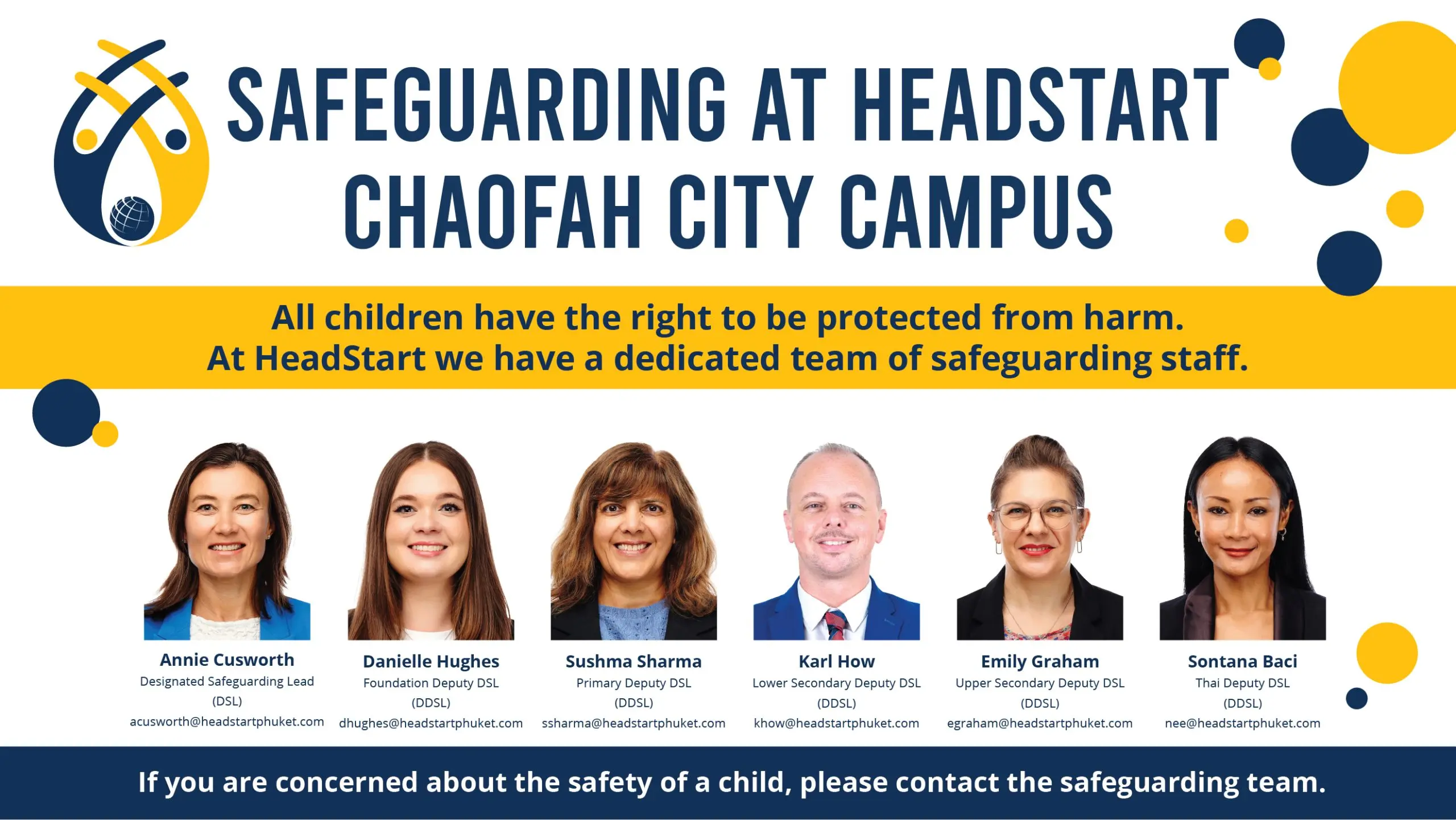
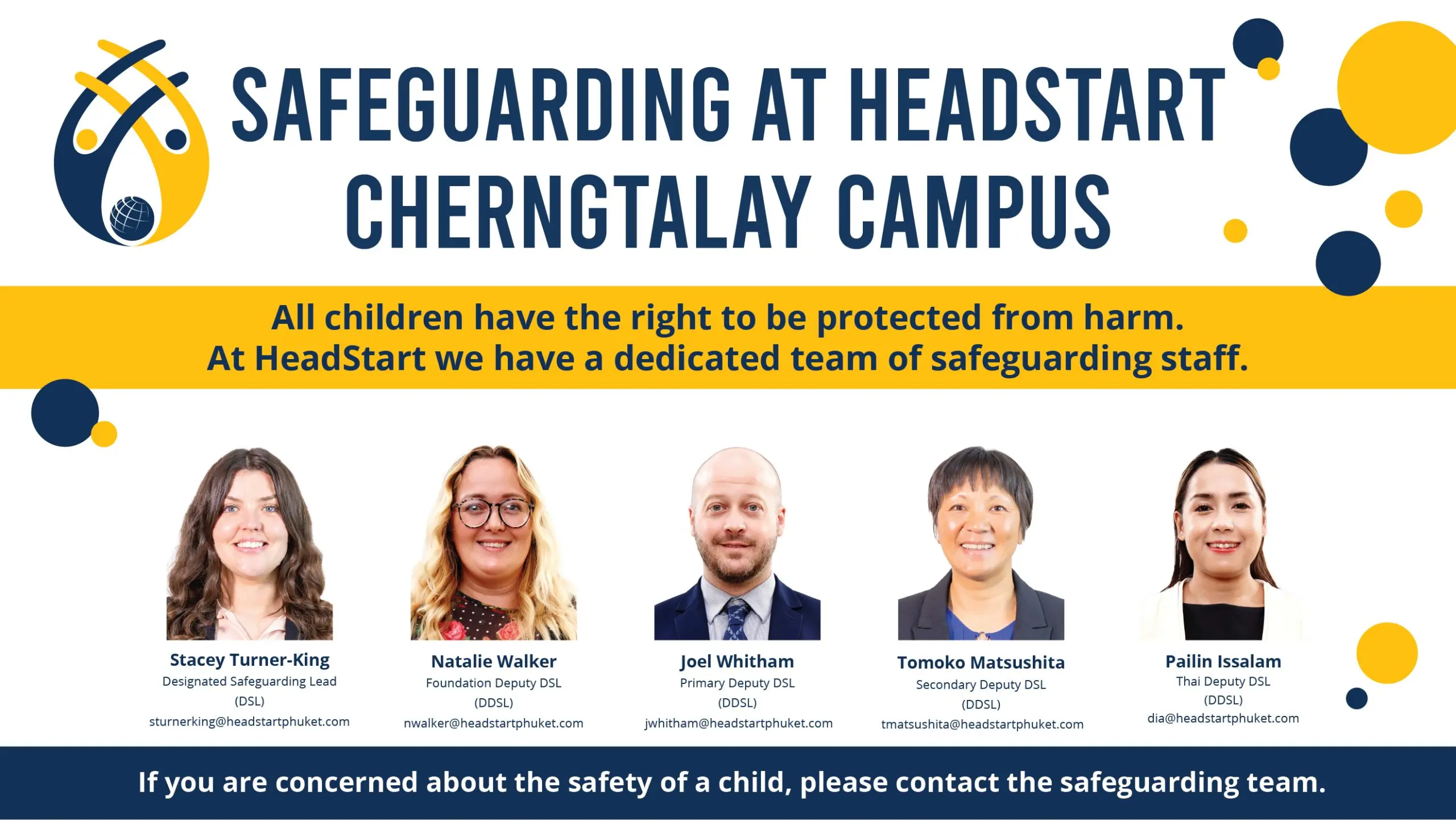
HeadStart has robust safeguarding systems and procedures in place, including a Designated Safeguarding Lead (DSL) and Deputy Designated Safeguarding Leads (DDSLs) for each phase of the school. These staff members take lead responsibility for safeguarding and child protection matters, provide guidance and support to colleagues, and coordinate responses to concerns about children’s welfare.
Statement & Aims
FOREWORD
All adults working in or on behalf of HeadStart have a responsibility to safeguard and promote the welfare of children. This includes:
- Providing a safe environment in which children can learn.
- Identifying Children who may be in need of extra help and taking appropriate action.
- Understanding how to identify and protect children who are suffering, or are likely to suffer, significant harm.
We believe that Safeguarding is the responsibility of everyone in the HeadStart family. All staff, volunteers, parents and guardians have a legal and moral responsibility to safeguard and promote the welfare of all students and should raise any concerns they have about poor or unsafe practice or worries about a child’s safety.
POLICY STATEMENT
HeadStart International School is committed to safeguarding and promoting the welfare of all children. Safeguarding is everyone’s responsibility. The procedures contained in this policy apply to all staff, both teaching and non-teaching, volunteers and external providers. We ensure that pupils are safe, feel safe, and know how to seek help. This policy is based on:
PRINCIPLES
- The welfare of the child is paramount
- All children have equal protection rights, regardless of age, gender, ability, culture, religion or background. This is inline with guidance in Thailand and the Equal Opportunities and Inclusion Policy
- Safeguarding includes prevention, protection, and support.
- Concerns are taken seriously and acted upon quickly.
AIMS
- To ensure all staff have the knowledge and training to meet their statutory responsibilities and safeguard children’s welfare.
- To promote consistent, high-quality safeguarding practice across the school.
- To demonstrate the school’s commitment to protecting children from harm and promoting their well-being.
DEFINITIONS
Safeguarding: The actions schools take to promote children’s welfare and protect them from harm, including preventing maltreatment, ensuring safe care, and supporting children to achieve their best outcomes.
Child Protection: Measures and procedures implemented when there is reasonable cause to suspect that a child is at risk of, or is experiencing, significant harm.
Child: Any person under the age of 18.
Staff: All adults working in the school, whether paid or voluntary, including teaching staff, support staff, and volunteers.
Child Abuse: Any form of maltreatment of a child, including physical, sexual, or emotional abuse, neglect, or exploitation, whether by a parent, caregiver, another adult, or another child, that results in harm or the potential for harm to the child’s health, development, or well-being.
Legal Framework & Communication
CHILD PROTECTION ACT (THAILAND)
As a school in Thailand, we have a duty under the Child Protection Act B.E. 2546 (2003) to act on suspected abuse. Section 29 requires anyone who finds a child in need of protection — including teachers, healthcare professionals, or employers — to provide preliminary aid and report promptly to a Competent Official or the police. Reports made in good faith are legally protected.
CONFIDENTIALITY
Students are encouraged to raise concerns in confidence. Staff must never promise confidentiality, as safeguarding information must be shared with the DSL (or Deputy/Head/Counsellor) on a need-to-know basis. Other leaders will be told only that a safeguarding concern exists, without full details, to enable appropriate pastoral care. Staff must never discuss safeguarding issues openly.
PARENT COMMUNICATION
The safeguarding policy is available on the school website, but will also be shared directly with parents at the start of each academic year.
Throughout the year, parents are invited to workshops, such as: understanding student support at school, online safety and supporting child behaviour. There is also a regular spot in the parent weekly newsletter for safeguarding and online safety updates relevant to the school community.
The school will consider the best needs of the child when communicating with parents about safeguarding concerns. Concerns about a child will be discussed with their parents, handled sensitively by the DSL/DDSL (or Thai Deputy DSL for Thai nationals). If notifying parents increases risk to the child, the school may instead contact the police or other relevant agencies.
Safeguarding Contacts
IMPORTANT CONTACT INFORMATION
For: Senior Managers, Teaching Staff, Staff, Volunteers and External Providers
HeadStart Chaofah (HSC)
| Role | Name | Contact Details |
|---|---|---|
| Designated Safeguarding Person (DSL) | Annie Cusworth | [email protected] |
| Deputy DSL (Foundation) | Danielle Hughes | [email protected] |
| Deputy DSL (Primary) | Annie Cusworth | [email protected] |
| Deputy DSL (Primary) | Sushma Sharma | [email protected] |
| Deputy DSL (Lower Secondary) | Karl How | [email protected] |
| Deputy DSL (Upper Secondary) | Emily Graham | [email protected] |
| Deputy DSL (Thai) - involved in all cases regarding Thai nationals and/or Thai law | Sonata Baci (Kru Nee) | [email protected] |
| School Counsellor - Full-time | Dickens Cheng | [email protected] |
HeadStart Cherngtalay (HSN)
| Role | Name | Contact Details |
|---|---|---|
| Designated Safeguarding Person (DSL) | Stacey Turner-King | [email protected] |
| Deputy DSL (Foundation) | Natalie Walker | [email protected] |
| Deputy DSL (Primary) | Stacey Turner-King | [email protected] |
| Deputy DSL (Primary) | Joel Whitham | [email protected] |
| Deputy DSL (Secondary) | Tomoko Matsushita | [email protected] |
| Deputy DSL (Thai) - involved in all cases regarding Thai nationals and/or Thai law | Pailin Islam (Kru Dia) | [email protected] |
| School Counsellor/Educational Psychologist (2 days per week) | Dr Helene | [email protected] |
Cross-campus
| Role | Name | Contact Details |
|---|---|---|
| Headmaster | Adam Drew | [email protected] |
| Foundation and Primary Principal | Sam Khan | [email protected] |
| Secondary Principal | Ben Wakeford | [email protected] |
| E-safety Advisor | James Scutt | [email protected] |
Childline: ChildLine Thailand offers a free, 24 hour phone service in Thai for any child who wants confidential advice: Childline Thailand 1387.
External Support Contact Details
| Organisation | Role | Contact Details |
|---|---|---|
| Thai Social Services, Ministry of Social Development and Human Security | Designated body and statutory authority for reporting concerns of child abuse or welfare concerns | Phone: 1300 Web referral: https://1300thailand.msociety.go.th/complaint Email: [email protected] |
| Police | Know who to contact when serious cases arise which may involve an imminent threat to life and therefore require an immediate escalation to law enforcement. | Tourist Police 1155 Royal Thai Police 191 |
| British Embassy Bangkok | The embassy assists British nationals in Thailand, which includes child safeguarding cases. The embassy will assist provide advice and assist in referring to social services. In serious cases of rape or sexual assault a consular officer will be deployed to provide support and liaise with other agencies. | Phone: 02 305 8333 (24 Hours) Website: www.gov.uk/world/organisations/british-embassy-bangkok |
| Embassy of The People's Republic of China | 02 245 0088 | |
| Embassy of Russia | 02 234 9824 | |
| Childline Thailand | Provides services for any child under the age of 18. Can provide advice and important information next steps, filing complaints with the police on behalf of child victims. They also provide counselling on the phone for children and families. | Email: [email protected] Phone: 1387 – free number to call open 24 hours a day (Thai language) http://www.childlinethailand.org/en/ |
| Glasgow Clyde Rape Crisis Centre | From 13 years and older, online support for both male and female survivors of rape and sexual assault worldwide. | Instant Messaging facility at: www.rapecrisiscentre-glasgow.co.uk Email: [email protected] to make your first contact and start an email conversation. |
| Siriroj Hospital Phuket (4 Chalermprakiat Ror 9 Road) | Children who are sexually assaulted should be assessed for the potential risk of HIV exposure and should be immediately considered for PEP. Other risks include acquiring other STIs and the possibility of pregnancy. | Phone: 076 361 888 |
| Hug Project NGO | Located in Chiang Mai that connect survivors and their families with resources to help them find safety, healing and hope. Alternative care is a last resort in severe cases of abuse or neglect. | Phone: 053 920 588 [email protected] |
| For Freedom International Child Advocacy Centre located in Phuket. | They can assist schools in child abuse cases providing a child friendly environment and links to social services. Assist in investigations with trained forensic interviewers. | Phone: 095 095 4786 https://forfreedominternational.com/ |
| Reporting online abuse or child sexual abuse material (CSAM). | Hug Project should be contacted if there are concerns about students sharing inappropriate sexual images. They have links to the police internet crime division TICAC. To report CSAM material, a report can be submitted via hotlines. | Hug Project [email protected] 053 920 588 Thai Hot Line https://thaihotline.org/en/report |
| Internet Watch Foundation | Concerns about inappropriate online images of children can be reported to the Internet Watch Foundation. | https://www.iwf.org.uk/en/uk-report/ |
Roles & Responsibilities
Protecting the welfare of children is the role of every professional who comes into contact with children at HeadStart. All staff have a responsibility to follow the procedure for responding to suspected cases of Child Abuse, or Specific Safeguarding Issues, including best practice in dealing with disclosures. All staff have a professional duty to report any concerns related to Safeguarding and Child Protection and to record any concerns on our school monitoring system, CPOMS.
All staff have the responsibility to read, understand and adhere to the Safeguarding and Child Protection Policy and Keeping Children Safe in Education (2026) (Part 1) to ensure appropriate conduct and actions.
Where there is an existing cause for concern about a child, staff should ensure that they monitor and report any further concerns to the Safeguarding Team immediately. Unplanned or unauthorised absences for such children should always be reported to the Safeguarding Team as soon as the register has been completed so that this can be followed up on.
All staff should wear their staff ID with blue lanyard at all times whilst on school site to identify themselves as a trusted adult who has unaccompanied access to all areas. Parents on site should be wearing parent ID with a yellow lanyard to indicate they are a trusted adult who can access public areas. Finally, visitors wear a visitor ID with a red lanyard and should be accompanied at all times. It is the responsibility of all staff to question adults in the school without a lanyard in order to maintain high standards of safety for all.
The school has nominated a senior member of staff (Designated Safeguarding Lead) to coordinate child protection arrangements, who is named in this policy guidance under Key Personnel. This person has the lead responsibility for safeguarding. The job description for the DSL and DDSLs (Deputy Designated Safeguarding Leads) can be found here.
Roles and Responsibilities of the Designated Safeguarding Team (DSL & DDSLs)
HeadStart has ensured that the DSL:
- Appropriately trained to at least Level 3 Advanced Training.
- Keep up to date with changes to statutory guidance.
- Ensures all staff, temporary staff, and volunteers are aware of who the DSL is and understand safeguarding procedures, including this policy.
- Acts as a source of support and expertise for the school community.
- Maintains clear, timely, and secure records of all concerns or disclosures, stored separately from academic files, and ensures onward referral in line with statutory guidance.
- Refers cases of suspected abuse or neglect to children’s social care or the police, following local procedures.
- Attends and contributes to child protection conferences as required.
- Coordinates the school’s contribution to child protection and safeguarding plans, including how safeguarding is embedded in the school’s curriculum.
- Develops and maintains links with statutory and voluntary agencies.
- Ensures staff acknowledge they have read and understood policies.
- Reviews and updates the child protection policy at least annually or when guidance changes.
- Liaises with the nominated governor and headteacher as appropriate.
- Facilitates and records staff attendance at child protection training.
- Ensures parents know how to access safeguarding information and raise concerns.
- Responsible for overseeing online safety
In the DSL’s absence, the DDSLs assume full responsibility for all safeguarding functions.
The School Board ensures that the school has:
- A Designated Safeguarding Lead (DSL) who is a senior member of staff and has received appropriate child protection training.
- Clear procedures for managing allegations of abuse against staff, including the Headteacher, in line with statutory guidance.
- Safer recruitment procedures, including appropriate pre-employment checks for all staff.
- A training strategy ensuring that all staff, including the Headteacher, receive safeguarding and child protection training, with regular refresher training at least every three years.
- Arrangements to ensure that all temporary staff and volunteers are informed of the school’s safeguarding arrangements and procedures.
The Thai Designated Safeguarding Contact is responsible for:
- Acting as a point of contact on safeguarding issues for Thai-speaking staff.
- Liaising with the DSL to translate disclosures and concerns.
- Ensuring all staff know to report safeguarding concerns to the DSL or, in their absence, the Head of School.
- Being available for consultation on child protection matters, especially for Thai-speaking staff.
- Undertaking safeguarding training at least every two years.
- Assisting with delivering regular safeguarding training in Thai in consultation with the DSL.
- Raising staff awareness and confidence in safeguarding procedures.
- Supporting temporary or short-term staff by being a point of contact for Thai speakers regarding the school’s safeguarding arrangements.
Meeting Regularity
| Safeguarding team meeting inc. Thai DDSL | Every term |
| DSL meeting | Every 2 weeks |
| DSL + Phase DDSLs | Every 2 weeks |
| DSLs + Headmaster | Every 2 weeks |
| SMT Meeting | Headmaster is the safeguarding representative at SMT meetings with safeguarding as a set agenda point |
Recruitment & Training
SAFER RECRUITMENT
HeadStart follows safer recruitment procedures as outlined in the Safer Recruitment Policy to ensure only suitable staff work with children. References and checks are rigorously verified, and interviews probe safeguarding awareness. Appointments require proof of identity and police clearance. A Single Central Record (SCR) is maintained, and all new staff complete a safeguarding-focused induction.
STAFF TRAINING
All staff must have training to recognise the signs of abuse and neglect and know what to do if they have a concern. New staff will complete online safeguarding training via the TES Develop platform as part of induction. Existing staff will complete this training biannually, with refresher training delivered during induction week, including procedures for reporting concerns. In addition, all staff will receive safeguarding updates regularly (e.g. via email, briefings, or staff meetings). The DSL, Deputy DSL, and key personnel will receive advanced training updated at least every two years.
Safeguarding and Child Protection Training
Alongside formal training, safeguarding is a key agenda in all meetings and specific training, feedback and updates are given throughout the year to ensure high standards of safeguarding understanding and implementation.
| What | Who | When |
|---|---|---|
| TES Develop Online Course Safeguarding and Child Protection | All teaching staff, including coaches, nannies and teachers Non-teaching Support Staff |
Deadline before the end of Term 1 |
Training delivered by members of Safeguarding Team
| What | Who | When |
|---|---|---|
| Induction Training/policies/ CPOMs | All teaching staff, including coaches, nannies and teachers Non-teaching Support Staff | Prep week |
| Online-safety | All teaching staff | February INSET 26 |
Thai Staff
| What | Who | When |
|---|---|---|
| Thai Language Training delivered by Thai DDSL | Thai staff | Prep week |
| Bespoke training | Cafe Staff | August 2026 |
Safeguarding Team
| What | Who | When |
|---|---|---|
| ICPA Level 3 Advanced Training (3 Days) | Stacey (HSN DSL) | October 2025 |
| COBIS Level 3 Advanced Training | Nikki | December 2025 |
| COBIS Level 3 Advanced Training | Natalie | December 2025 |
| COBIS Level 3 Advanced Training | Danielle | April 2025 |
| COBIS Level 3 Advanced Training | Kru Nee | April 2026 |
| COBIS Level 3 Advanced Training | Kru Dia | April 2026 |
| Advanced E-safety for DSLs | Annie (HSC DSL) | January 2026 |
| Suicide Prevention PAPYRUS | Stacey (HSN DSL) | January 2026 |
| Suicide Prevention PAPYRUS | Emily Graham | May 2026 |
| Eating Disorder Awareness (Mind Your Health) | Annie Cusworth | May 2026 |
Types of Child Abuse
Abuse can take many forms. Staff must remain vigilant to the possibility of abuse which may present as signs and symptoms, or as a direct disclosure.
The four main types of abuse—physical, emotional, sexual, and neglect—often overlap and interconnect. Abuse may occur in person, online, or within specific community contexts.
NEGLECT
Neglect is the persistent failure to meet a child’s basic physical and/or psychological needs, likely to result in the serious impairment of the child’s health or development. Neglect may involve a parent or carer failing to; provide adequate food, clothing, or shelter (including exclusion from home or abandonment); protect a child from physical and emotional harm or danger; ensure adequate supervision (including the use of inadequate caregivers); ensure access to appropriate medical care or treatment. It may also include neglect of, or unresponsiveness to, a child’s basic emotional needs.
Signs or symptoms which may indicate neglect:
- Hunger
- Poor personal hygiene
- Dirty, ill-fitting or inappropriate clothes
- Tiredness or listlessness
- Poor school attendance or frequent lateness
- Poor concentration
- Demanding or attention-seeking behaviour
- Stealing or scavenging compulsively
- Failure to achieve developmental milestones
PHYSICAL ABUSE
Physical abuse is deliberately causing physical harm to a child. This may include hitting, shaking, throwing, poisoning, burning, drowning, or suffocating. It can also involve fabricating or inducing illness. Physical abuse is always considered abuse, regardless of intention or severity.
Signs or symptoms which may indicate Physical Abuse:
- Bruising, including inconsistent accounts of how bruising or injuries have occurred
- Bald patches
- Burns or scalds
- Fear of going home or of parents being contacted
- Fear of medical help
- Inexplicable fear of adults or over-compliance
- Violence or aggression towards others, including bullying
- Reluctance to undress for PE or swimming
As of March 25, 2025, Thailand has amended Article 1567(2) of the Civil and Commercial Code to prohibit all forms of corporal punishment by parents and guardians. This amendment aligns with international standards and underscores the state's commitment to protecting children's rights. The school considers corporal punishment a form of physical abuse and does not condone its use in any setting.
SEXUAL ABUSE
Sexual Abuse is defined as forcing or enticing a child to take part in sexual activities, whether or not the child is aware of what is happening. This includes physical contact, such as assault by penetration, or non-penetrative acts such as masturbation, kissing or touching inappropriately. Sexual Abuse includes non-contact activities like involving children in looking at or producing sexual images, watching sexual activities, grooming, or encouraging sexually inappropriate behaviour, both online and offline. Sexual Abuse can be perpetrated by both male and female adults, as well as other children.
Signs or symptoms which may indicate Sexual Abuse (although there are frequently no signs of this type of abuse):
- Sexually explicit or age-inappropriate behaviour, including frequent or inappropriate masturbation, sexual harassment, or touching others inappropriately
- Physical signs such as anal or vaginal discharge, soreness, scratching, or bruises in the genital area
- Regressive behaviour, involuntary urination, or soiling
- Urinary tract infections
- Persistent physical complaints, such as stomach pains
- Eating disorders
- Reluctance to undress for PE or swimming
- Attention-seeking behaviour
- Lack of trust in a familiar or particular adult
- Unusually compliant or passive behaviour
EMOTIONAL ABUSE
Psychological or emotional abuse is the persistent emotional maltreatment of a child or young person that can cause severe and long-lasting adverse effects on their emotional development and well-being. This may involve constant criticism or ridicule, threats, shouting, or rejection, as well as exposure to hostility or indifference, and not giving the child the opportunity to express their views. Emotional Abuse always occurs alongside all other forms of abuse, though it may occur alone.
SIGNS OR SYMPTOMS WHICH MAY INDICATE EMOTIONAL ABUSE:
- Regressive behaviours such as rocking, head-banging, soiling, smearing faeces, or enuresis
- Self-harm, substance misuse, or compulsive stealing
- Fear of parents or carers being contacted, or running away
- Eating disorders or disturbed eating patterns
- Speech or communication difficulties, including sudden speech disorders or selective mutism
- Low self-esteem, continual self-deprecation, or overreaction to mistakes
- Delayed physical, emotional, or mental development
CHILD-ON-CHILD ABUSE
Child-on-child abuse is any form of harm a child may inflict on another, including bullying (cyber or otherwise, please see Anti-bullying Policy), physical abuse, sexual violence or harassment, upskirting, and sharing nudes. initiation/hazing, and coercive behaviours. It is never tolerated or dismissed as ‘banter’ or ‘part of growing up.’
Signs or symptoms which may indicate child-on-child abuse:
- Unexplained injuries, bruises, or marks
- Sudden or persistent changes in behaviour, including withdrawal, anxiety, or aggression
- Avoidance of particular places, groups, or individuals
- Repeated absences, reluctance to attend school, or decline in academic performance
- Secretive or distressed use of phones or technology
- Fear of reporting incidents due to threats, intimidation, or coercion
MANAGING ALLEGATIONS OF CHILD-ON-CHILD ABUSE
If child-on-child abuse is reported, the DSL will inform the relevant Assistant or Deputy Head (Pastoral), who will ensure support for all involved and determine next steps. If necessary, a full investigation will be carried out, taking into account the age, developmental stage, and needs of the children involved. Parents will be notified if this does not put the child at further risk.
Specific Safeguarding Issues
ONLINE SAFETY
The person responsible for online safety is the DSL, or the relevant DDSL in their absence.
It is essential that children are safeguarded from potentially harmful and inappropriate online material. Online safety risks can be categorised into four areas of risk: content: being exposed to illegal, inappropriate or harmful content; contact: being subjected to harmful online interaction with other users; conduct: personal online behaviour that increases the likelihood of, or causes, harm; commerce: risks such as online gambling, inappropriate advertising, phishing or financial scams.
The school takes a proactive approach to educating pupils about online safety. This includes embedding online safety teaching across the curriculum and providing age-appropriate resources that enable children to develop the knowledge, skills, and confidence they need to navigate the online world safely. Pupils are supported to recognise risks, make safe choices, and understand how and to whom they can report concerns.
All staff receive training and updates on online safety, including emerging risks linked to social media, artificial intelligence, deep fakes, online gaming, and new digital platforms. This ensures they are able to identify concerns, respond appropriately, and help pupils develop safe and responsible online behaviours.
Parents and carers are recognised as vital partners in supporting online safety. The school provides guidance to help families reinforce safe online practices at home, and where appropriate, we signpost to further sources of support.
ONLINE ABUSE
Online abuse can expose children to sexual exploitation, bullying, and harmful content, often overlapping with other abuse types. Staff must be vigilant, teach safe online behaviour, monitor digital activity within school, and report concerns promptly to the DSL to safeguard children’s welfare and prevent harm.
MENTAL WELL-BEING
The school recognises that mental health and wellbeing are an important part of safeguarding and promoting the welfare of children. Mental health difficulties can, in some cases, develop into safeguarding concerns and may also be an indicator that a child has suffered, or is at risk of suffering, abuse, neglect or exploitation.
Staff are well placed to observe children on a day-to-day basis and identify changes in behaviour, presentation or wellbeing which may indicate that a child is experiencing, or is at risk of developing, a mental health difficulty. Staff are not expected to diagnose mental health conditions; diagnosis should only be undertaken by appropriately trained professionals.
Where a mental health concern may also be a safeguarding concern, staff must report this to the DSL or DDSL without delay. Appropriate support, intervention and referrals will then be considered, including involvement of the school counsellor and external professionals where required. The school recognises the importance of early identification, targeted support and a whole-school approach to mental health and wellbeing.
Concerns relating to self-harm, suicidal ideation or risk of suicide will be managed in accordance with the school’s Suicidal Ideation and Self-harm Policy, which outlines indicators, risk factors and procedures for responding to concerns.
SUBSTANCE ABUSE
Substance misuse is viewed primarily as a safeguarding concern, although it may also involve breaches of the school's behaviour expectations. All incidents involving substance misuse must be recorded on CPOMS and assessed through a safeguarding lens. The Designated Safeguarding Lead (DSL) must be informed of all substance-related incidents. The pastoral and safeguarding teams will work collaboratively with school leaders, parents and the student to assess risk, provide appropriate support and monitor ongoing welfare. Students will receive additional support through the school counsellor and other relevant agencies.
UNSUPERVISED LIVING CONDITIONS
Children are expected to live with a parent or guardian until leaving school. At any age, living without parental supervision, or solely with a nanny or carer is considered a safeguarding risk. Staff must report concerns to the relevant DDSL and follow the procedure for recording. The school cannot enforce living arrangements but will report children living unsupervised to the relevant authorities.
DOMESTIC ABUSE
Domestic abuse can take many forms and may occur as a single incident or as a repeated pattern of behaviour. It includes, but is not limited to, psychological, physical, sexual, financial, and emotional abuse. Children can also be affected by domestic abuse, either by witnessing or experiencing its impact within the home, or through abuse in their own intimate relationships, including teenage relationship abuse. Such experiences can have significant and lasting effects on a child's physical and mental health, emotional well-being, development, and educational attainment.
SERIOUS VIOLENCE
All staff should be alert to indicators that may suggest a child is at risk of, or involved in, serious violent crime. Warning signs may include increased absenteeism from school or college, changes in friendship groups or associations with older individuals or groups, a marked decline in academic performance, evidence of self-harm, significant changes in emotional wellbeing, or signs of physical assault and unexplained injuries. Additionally, unexplained gifts, money, or new possessions may indicate that a child has been targeted by, or is involved with, individuals linked to criminal networks or gangs. These factors may place the child at heightened risk of criminal exploitation.
HONOUR-BASED ABUSE
‘Honour-based’ abuse encompasses incidents which have been committed to protect or defend the honour of the family and/or the community. Abuse committed in the context of preserving ’honour’ often involves a wider network of family or community pressure and can include multiple perpetrators. All forms of honour-based abuse are abuse, and should be reported to the relevant DSL.
FEMALE GENITAL MUTILATION (FGM)
Female Genital Mutilation (FGM) is a form of child abuse and a serious safeguarding concern. Staff must report concerns to the relevant DDSL and follow the procedure for recording.
AFFLUENT NEGLECT
This is neglect occurring in families with wealth or high social status, where a child’s material needs may be met, but emotional, physical, or supervisory needs are unmet.
Indicators:
- Chronic lack of parental presence due to work, travel, or social commitments.
- Outsourcing of care without oversight (e.g., multiple nannies, drivers, tutors).
- Emotional needs ignored; child may appear lonely, isolated, or pressured academically.
- Poor hygiene, inadequate sleep, or lack of boundaries despite material privilege.
International/expat settings may normalise long parental absences, high reliance on domestic staff, or permissive/overly pressured environments.
CHILD SEXUAL EXPLOITATION (including online exploitation)
This is a form of child sexual abuse where children are manipulated, deceived, coerced, or forced into sexual activity, often in exchange for something (money, gifts, affection, status, or attention).
Online exploitation: Grooming, sharing of sexual images/videos, coercion via social media or gaming platforms.
Indicators:
- Sudden possession of gifts, money, or devices they cannot explain.
- Increased secrecy around online activity.
- Sexualised behaviour or language unusual for age.
- Withdrawal, distress, or changes in peer group.
Risks in Thailand are exacerbated through easy access to social media and messaging apps, limited parental oversight, and potential targeting of international school students due to perceived affluence.
CHILD CRIMINAL EXPLOITATION
This refers to when children are manipulated or coerced into committing crimes, often for the benefit of adults. They may be forced into activities such as drug trafficking, theft, financial scams, or smuggling goods.
Indicators:
- Unexplained money, possessions, or travel.
- Fearful, secretive behaviour, sudden absences from school.
- Signs of coercion or threats.
- Involvement with older peers or adults who exert control.
International students may be drawn into drug-related activities, online financial scams, or being used to carry contraband, especially if vulnerable or isolated.
Safe Touch
HeadStart recognises that physical touch may be required between students and staff members, particularly with younger children. However, any physical touch should always be appropriate, proportionate, and respectful of the child’s age, stage of development, and personal boundaries.
Staff must always consider the child’s comfort, wishes and understanding before any physical contact. If physical contact is needed to provide support, permission should be sought from the child first at an age-appropriate level.
Examples of appropriate physical touch:
- It is required to prevent a child from harming themselves or others.
- It is necessary to provide first aid or physical assistance with consent (e.g. helping a child who has fallen, guidance in a PE lesson).
- A child initiates physical contact, such as a hug.
Examples of inappropriate physical touch:
- Initiating unnecessary or casual physical contact of any kind.
- To discipline, gain attention or control.
- Any behaviour that could be seen as sexual, intrusive, or intimidating.
The school’s ethos promotes teaching children about personal space, consent, and appropriate boundaries as part of the curriculum and student well-being.
Photography
Photography in school must prioritise children’s safety and privacy at all times. Images will only be used for agreed purposes and safely and respectfully. Parental consent for their child to be photographed is given at the point of admission and is recorded on the school MIS, Engage, as well as being listed on a ‘no photo list’ attached to every weekly bulletin. Parents have the right to refuse or withdraw consent.
Photos taken by staff:
- Photos can be taken on personal devices for educational purposes only.
- Photos should be stored securely on the school system as soon as possible and deleted from staff personal devices.
- Staff should never share photos of children on their social media platforms, including messaging apps, unless they are resharing photos already officially published by the school. Please see Staff Device and Social Media Policy.
Photos taken by parents:
- Parents are only allowed to take photographs at birthday parties and at sporting events. This is outlined in the Parent Handbooks (see appendix).
- If in doubt, parents should contact the Head of the Department.
Dealing with Disclosures
MANAGING CONCERNS ABOUT CHILDREN
- Stay calm – do not panic or show shock.
- Listen carefully without interrupting or prompting.
- Reassure the child they did the right thing; praise their courage.
- Avoid assumptions or leading questions; use neutral, age-appropriate language.
- Clarify only if needed (e.g. What happened? Who was involved? Where? When?).
- Do not investigate or press for detail — this is the role of safeguarding staff/authorities.
- Let the child know they are believed and will be supported.
- Do not promise secrecy; explain that the information may need to be shared with safeguarding staff, but will remain as confidential as possible.
- Ensure the child’s safety during and after the conversation; do not leave them in a situation where they may feel pressured to change their account.
- If the child is at immediate risk, do not send them home until the safeguarding team has decided next steps.
- Record the disclosure immediately, noting dates, times, and the child’s own words.
- Report promptly to the DSL, Deputy DSL, or Head of School in their absence.
- Maintain confidentiality – do not discuss with others except for safeguarding purposes; breaches are a serious matter.
Children with SEND may face extra barriers to disclosing abuse, including communication difficulties, social isolation, misinterpreted behaviours, or limited understanding. Staff must remain vigilant, provide accessible communication, and never assume disclosure will be straightforward
Reporting & Referrals
REPORTING AND RECORDING CONCERNS
- All staff and volunteers must report any concern, however minor, that a child may be at risk of harm, including suspected abuse, neglect, or safeguarding issues.
- Observations, communications, or other concerns must be recorded factually on CPOMS, using the child’s own words where possible.
- Concerns must be reported to the relevant DDSL before the end of the school day, or directly to the DSL without delay if there is an immediate threat.
- Staff must assign the CPOMS log to the DSL. The relevant DDSLs will also be automatically alerted.
- Failure to report disclosures or concerns breaches the Safeguarding and Child Protection Policy and may result in disciplinary action.
Out of hours concerns
- If a concern arises outside of normal school hours (7:00-4:30 Monday-Friday), such as during an academy, school visit, the weekend or school holiday, staff should contact the Headmaster (Adam Drew) in the first instance. If he cannot be contacted, the staff member should contact Sam Khan (Primary Principal) or Ben Wakeford (Secondary Principal).
| Name | Role | Contact Number |
|---|---|---|
| Adam Drew | Headmaster | 086 415 0850 |
| Sam Khan | Primary Principal | 094 312 1570 |
| Ben Wakeford | Secondary Principal | 092 268 1272 |
Responding to Possible Indicators
- If staff notice changes in behaviour, unusual artwork, or other signs, they may offer the child a neutral, supportive opportunity to talk (e.g., asking if they are alright or need help).
- Staff must listen, reassure, avoid investigating, and promptly report all concerns to the DSL, recording them on CPOMS.
Cases of Suspected Sexual Abuse
- All suspected cases must be reported to the relevant Thai authorities by the DDSL for Thai nationals in collaboration with the DSL.
- Within the family, authorities must be contacted before the family is informed.
- Outside the family: both the family and authorities will be notified.
- The school must not investigate or question the child in detail.
Other Forms of Abuse
- The DSL will take action in consultation with the Head of School.
- The Head of School and Director will liaise with external agencies where necessary, keeping the DSL informed.
- Students showing signs of harm will be referred to the School Nurse or, if urgent, to Bangkok Hospital Phuket (designated paediatric hospital).
- Where a child is at immediate risk, the matter will be reported promptly to external authorities.
- If family involvement is appropriate, the Head of School will contact them. If this would place the child at further risk, alternative actions will be taken.
- Suspected abuse by staff or volunteers must be reported immediately to the Head of School, who will consider suspension if appropriate.
Student Reports a Nude or Semi-Nude Image
- Listen calmly and reassure the student. Do not promise confidentiality. Follow the policy for managing disclosures, reporting, and recording.
- Do not view, copy, save, share or forward the image. Viewing or sharing the image may be illegal and is not required to safeguard the child.
- DSL will take lead responsibility immediately and ensure the child’s safety and well-being.
- The DSL will not routinely view the image. They will only do so if there is a clear safeguarding need and no alternative; never copy, save, or share it.
The school adopts a child- and victim-centred approach. All decisions are made in the child’s best interests, with consideration of the cultural context of Thailand.
REFERRAL TO THE POLICE AND RELEVANT AGENCIES
The DSL or Thai School Director will refer cases to the police and other relevant agencies if a child is, or may be, at risk of significant harm. The child (depending on age and understanding) and parents will be informed unless doing so increases the risk. For Thai nationals, the Ministry of Social Development and Human Security can be contacted via the Thai School Director. For foreign nationals, the relevant consulate should be contacted. ChildLine Thailand provides confidential, 24-hour advice in Thai: 1387
Allegations Against Staff
ALLEGATIONS AGAINST A MEMBER OF STAFF
Allegations of abuse by staff or volunteers are managed by the Headmaster in accordance with the Whistleblowing Policy. If the allegation involves the Headmaster, it must be reported directly to the CEO, who will liaise with relevant external agencies, without informing the Headmaster. Allegations against a DSL must be reported immediately to the Headmaster. Records relating to staff allegations are kept separately from other child protection files.
If necessary, a full investigation will be conducted. Staff are not automatically suspended following an allegation; the Head of School will decide on next steps.
Possible outcomes of an investigation:
- Upheld: There is sufficient evidence on the balance of probabilities to support the allegation.
- Unsubstantiated: Insufficient evidence to prove or disprove the allegation; this does not imply guilt or innocence.
- Unfounded: There is no evidence to support the allegation, or evidence shows it is untrue.
- Malicious: The allegation was made deliberately to deceive or cause harm.
Downloads
Please find below important documents available for download.
Related Policies
Please review the additional policies below that outline our core commitments and standards. Copies of all relevant policies are available upon request from the school.
Our commitment to your child
A vibrant global community
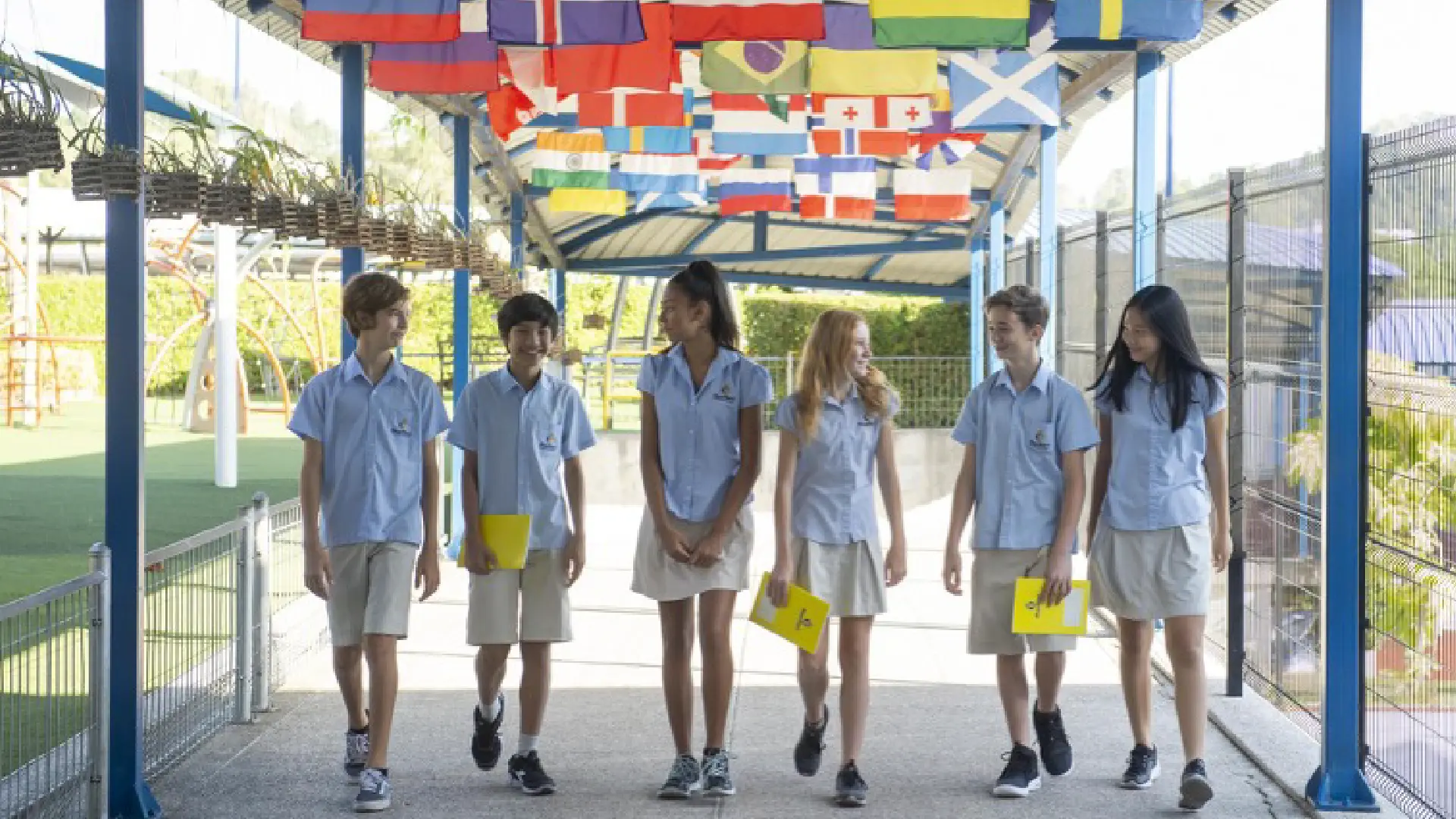
At HeadStart, your child joins a welcoming family of over 50 nationalities. We foster a supportive, inclusive environment where students build lifelong friendships and develop a true understanding of the world.
Proven academic excellence
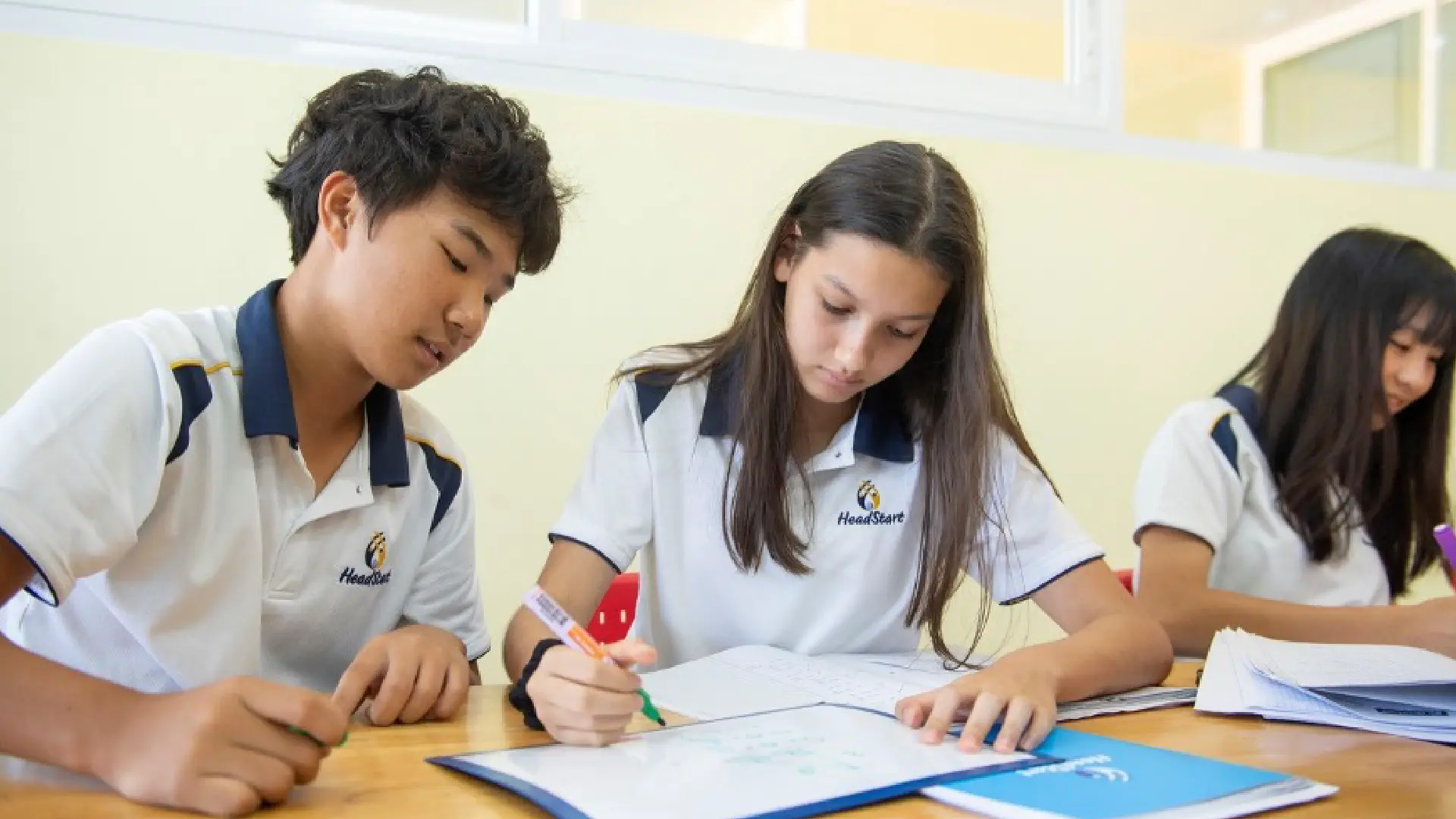
Your child’s future is our focus. Our students consistently achieve outstanding IGCSE and A-Level results, earning 'Top in Thailand' and 'Top in the World' awards. This academic rigor opens doors to the world's leading universities, including Yale, Stanford, and Cambridge.
Nurturing individual potential
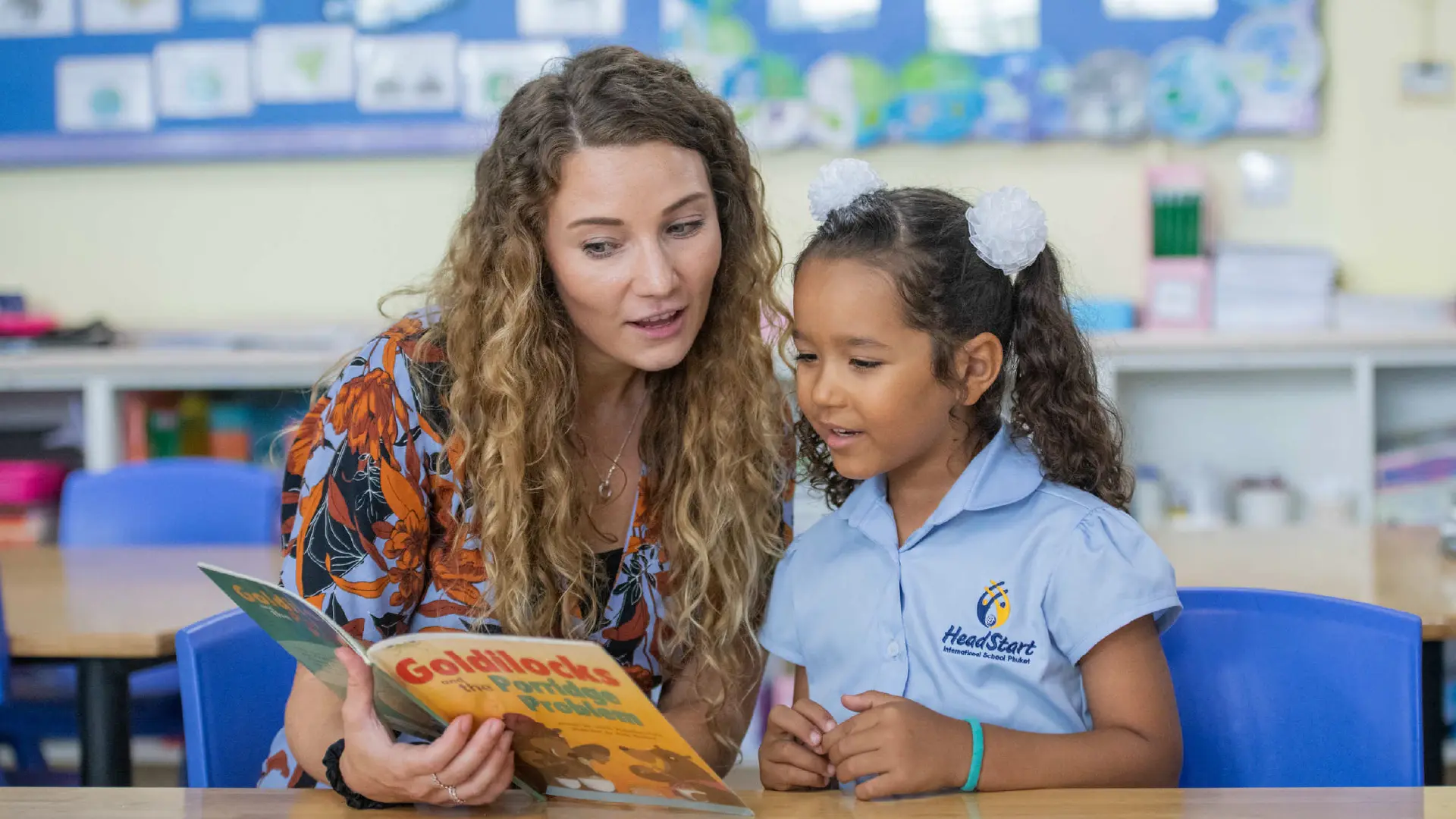
We believe true growth happens when learning is personal. Our passionate, professional teachers take the time to understand your child's unique talents and learning style, providing tailored support and challenges that build confidence and inspire a love of learning.
Life at HeadStart
From academic breakthroughs to championship wins, there is always an inspiring story unfolding at HeadStart. Browse the latest articles below to catch up on the news, events, and daily life across our Chaofah and Cherngtalay campuses.