
 Chaofah City
 Chaofah City







Weekly Update #1, 23 August 2024
Announcements
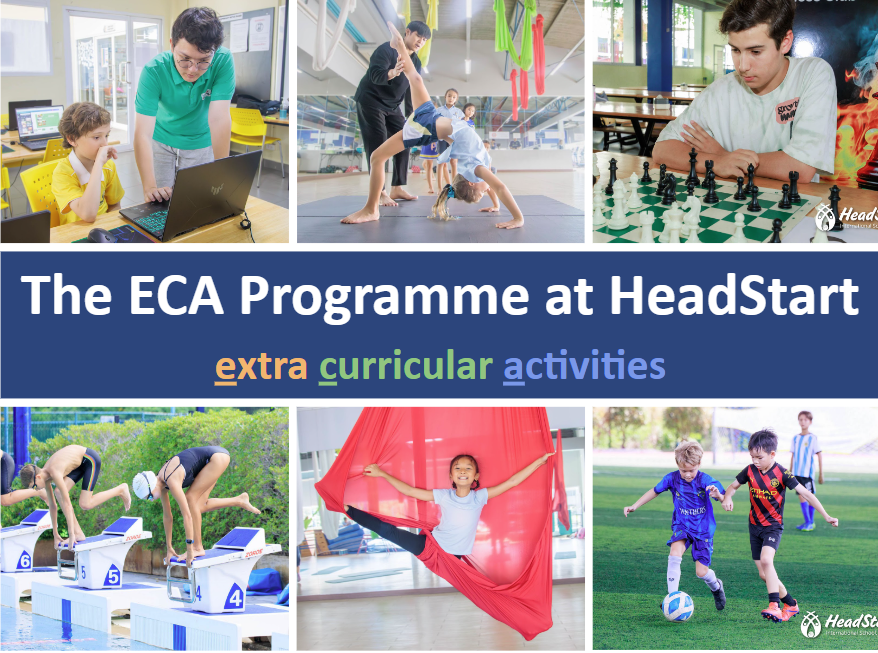
Extra Curricular Activities (ECAs)
Do you need help booking your child’s ECAs on the Parent Portal? Click on the link below to access a step by step tutorial. If you need further assistance, contact our ECA team by writing to [email protected]
Parent Fitness Classes
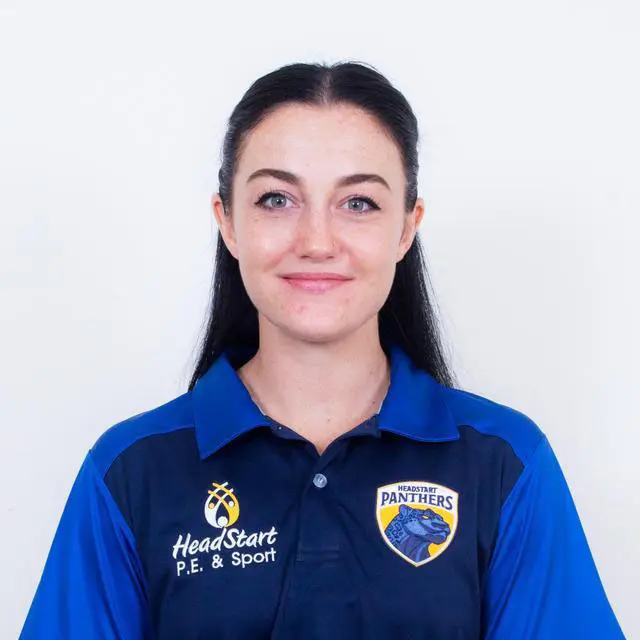
Join us for another action packed year of parent fitness classes with our brilliant trainers, every morning from 08.00-09.00am in the fitness suite on the third floor of the Sports building (Building C). These classes are free of charge and have been organised to promote healthy and active living within our community. See you in the gym! In addition to our free parent classes, Coach Jordi is also available for private individual and group training sessions. 👉 If you require further information about parent fitness or private training sessions, see the fliers below or contact our new fitness coach, Jordi, by writing to [email protected]

Parent Meetings
University Preparation at HeadStart (UPrep) on 28.08.24
We understand that supporting your children through the university application process can be a nerve-wracking experience and at HeadStart we would like to offer our support to you as parents. We will be offering a series of workshops designed to inform and support parents through the stages of university application processes. The first of these workshops will outline the UPrep programme and the student experience at HeadStart, as well as introduce you to the main timelines and how best to support your child through the application process. This will be held from 8:30 - 9:20 am on Wednesday 28th August, in the Secondary Hall on Floor 4.
We will also be offering informal drop-in sessions every other week, starting on Wednesday 4th September. These will be held in the cafe downstairs at the same time (8:30 - 9:20 am). Our two Guidance Counsellors, Mr Roscoe ([email protected]) and Mr Thomas ([email protected]) will be available at this time. Below is a summary of the planned series of talks this academic year. If you have any questions at all or do not see the talk you would like advertised, please get in touch as we would really appreciate your feedback. -Emily Graham, Assistant Head of Upper School ([email protected])
UPrep Talk Programme in English & Thai
Parent Meeting: Introduction to the ECA Programme
Thanks to everyone who attended the parent meeting introducing our ECA (Extra Curricular Activities) programme. We hope that you found the information provided useful. If you were not able to attend, you can access the presentation by clicking here!
Friday Market - Support the Community
Come along and support our local vendors at our very first Friday Market of the year taking place in the atrium on Friday 6th of September from 2.30-4.30pm. There will be lots of treats and souvenirs to choose from.

School News
Induction for Over 70 New Teaching Staff Members
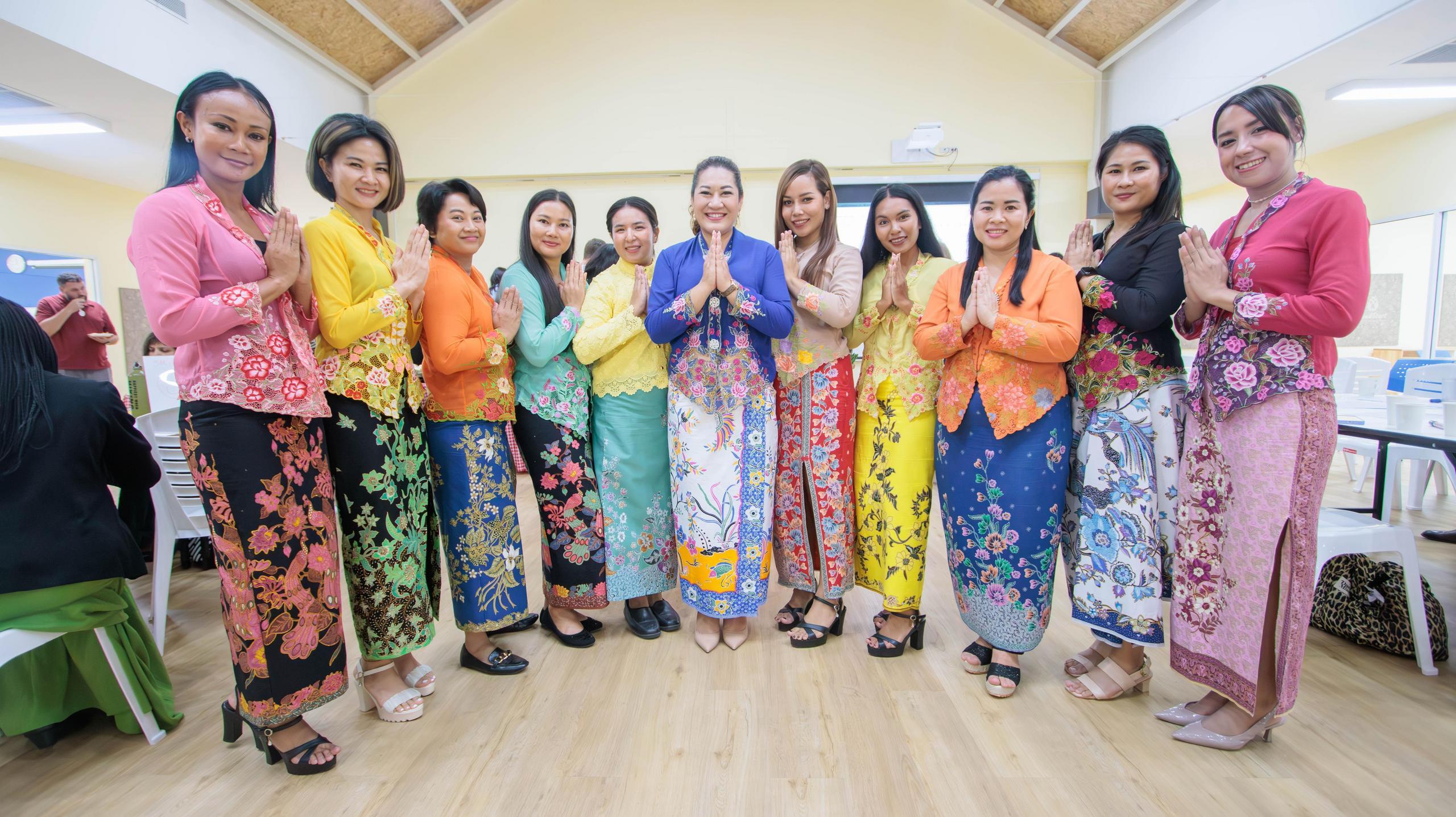
This year we have welcomed over 70 new teaching staff to our growing HeadStart community, and we are thrilled to have them on board. As part of their induction, we’ve introduced a special Thai culture course to help them feel right at home. Our new teachers are learning the essentials of Thai greetings and manners, and they even got to experience the vibrant flavors of Thailand with a taste of delicious somtam! We believe that embracing the local culture enriches our school environment and helps our staff connect more deeply with our students and community. Welcome to the team!



Parent Orientation
We were overjoyed to welcome both new and returning families to our Parent Orientation Day on Friday 16th August 2024. Introducing our leadership and teaching teams to our ever-growing school community, as well as offering the opportunity to explore our Chaofah City campus, was a great way to start the new academic year. With introductions to our curriculum, daily classroom routines, language options and extra-curricular activities (ECAs), our enthusiastic team were on hand to provide insight, answer questions and get to know the new additions to our school community. We are so excited for the coming year and all of our team are ready to welcome you to a new school year!


Monday Morning Flag Raising - A time to pay respect to our host nation and celebrate a new academic year. Thank you to Tim and Mint in Year 11 for being our flag bearers today and introducing our Head boy, Krittat Phaisamran and our Head Girl, Alisa Boltovskaia as student leaders for the 2024-2025 academic year.


Foundation & Primary
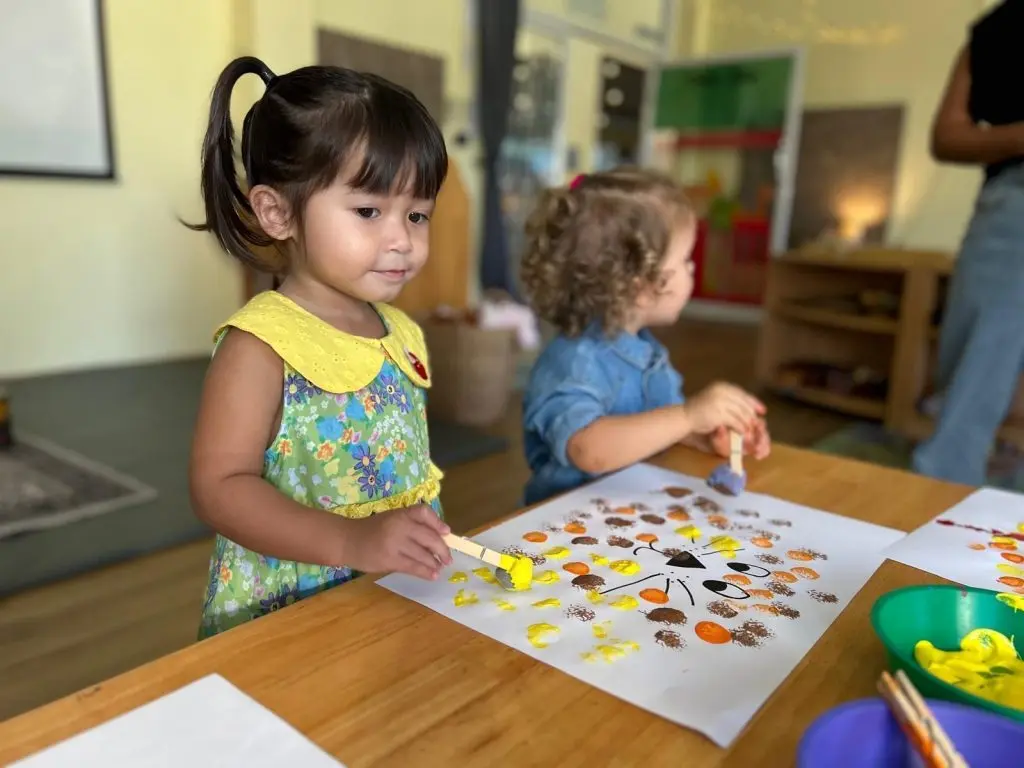
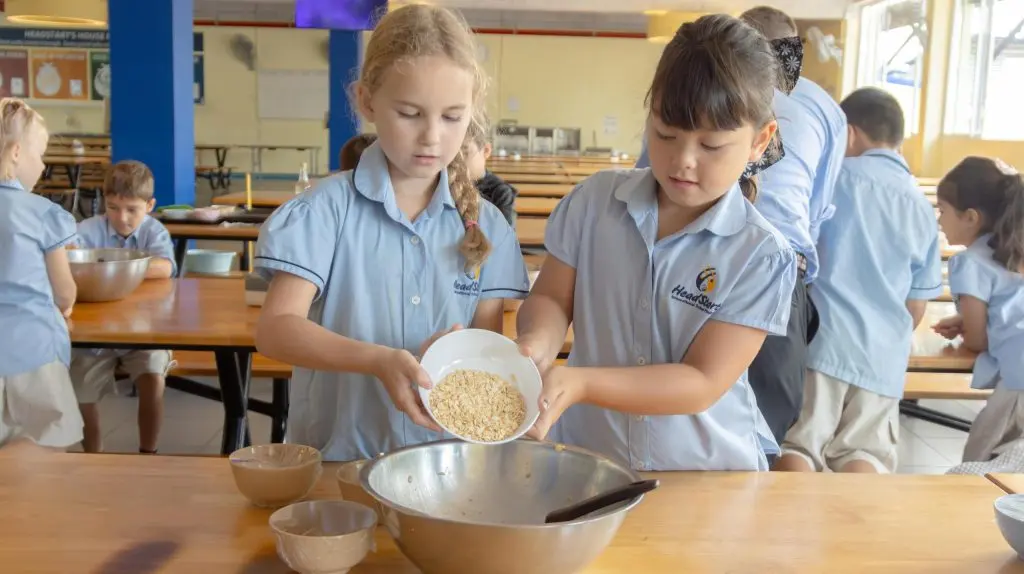
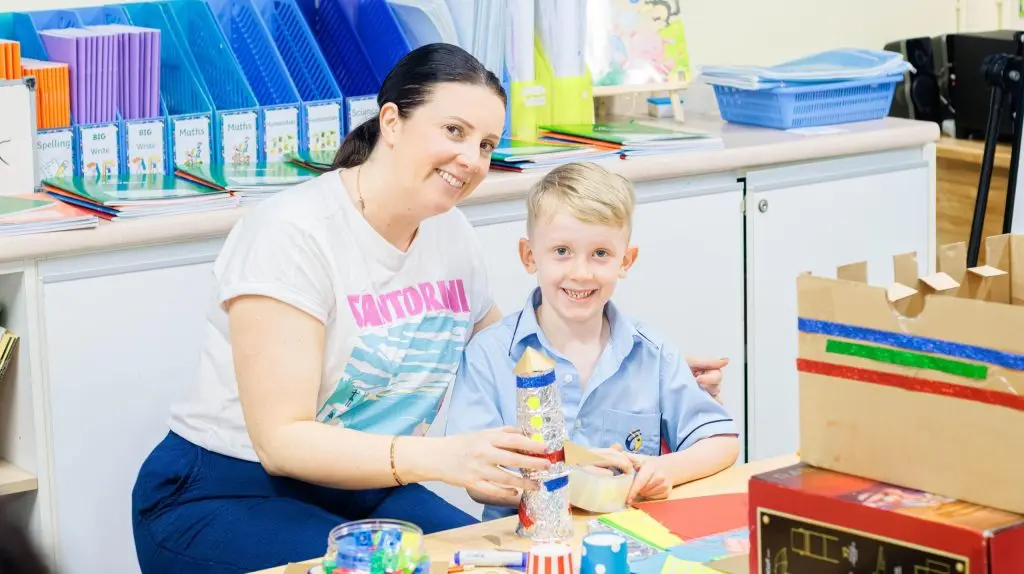
We are excited to welcome our Foundation and Primary students back to school for a year filled with learning, fun, and new adventures. Whether you’re meeting old friends or making new ones, this year is going to be an amazing journey for all of us. Remember, every day is a new opportunity to learn something new, to be kind, and to grow together. Let’s make this year the best one yet!





Secondary
Sixth Form Bonding Day
Sixth Form Bonding Day on Monday 19th was a great success as new and returning students connected through a beach clean at Kata Beach, team-building games in the Sports Hall, and homeroom activities. The day strengthened friendships and fostered a sense of community, while also giving back to the environment. -Ms Tuppen, Mr Guarino and Ms Graham


Student Success
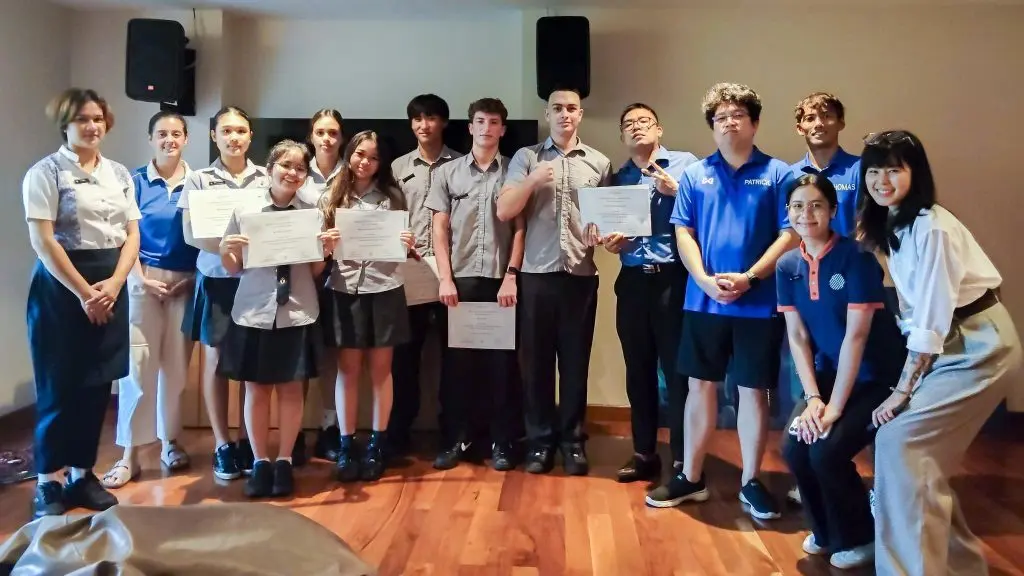
We are thrilled to announce that two of our Year 12 students, Emma and Berta Palop Roca, have successfully passed the HSK Level 4 certification! After months of dedication and hard work under the expert guidance of our Secondary Mandarin teacher, Mr. Tian Banchao, Emma and Berta have now received their well-deserved certificates. HSK, or the Hanyu Shuiping Kaoshi, is an international standardised test that evaluates and certifies Chinese language proficiency. Achieving Level 4 is a significant accomplishment—it indicates that a student can communicate fluently in Chinese on a wide range of topics and engage in conversations with native speakers with ease. This level demonstrates strong command over 1,200 commonly used words and the ability to understand complex Chinese texts. A huge congratulations to Emma and Berta for their outstanding achievement! We are incredibly proud of their progress and the hard work they’ve put into mastering their Mandarin skills. We would also like to extend our heartfelt thanks to Mr. Tian Banchao for his unwavering support and dedication in preparing our students for this challenging exam. His expertise and encouragement have been instrumental in their success.
If other families are interested in learning more about the HSK certification or considering it for their children, please don’t hesitate to reach out to me at [email protected]. We are always here to support our students in their language learning journey. -Mr Salmon, Director of Languages

English Department
In previous years, I have written pieces for The Phuket News and our HeadStart community about the continued impressive results in the English & EAL Faculty. This year, in all honesty, I was very much tempted to do the same. I mean, why wouldn’t I? For the sixth consecutive year, students secured 100% A*-C at A Level and AS; every single Year 13 improved their score from their AS results; and we had some outstanding results in both IGCSE and A Level, with more than one student achieving that most rare of things in English- a perfect score of 100%. And yet… Not only do you all hear quite enough from me, but, as attributed to my countryman Benjamin Disraeli by Mark Twain, there are three kinds of falsehoods, “Lies, damned lies and statistics.” So rather than just bombard you with numbers (never the natural bedfellows of an English teacher), I thought it would be more interesting and personal to let some of the students share with you their learning journeys in English and how they arrived in a place where they enjoyed examination success. Please enjoy. - Mr. Pollicutt, Head of English & EAL
Seungha Lee, Year 12
When I look back at my early years before HeadStart, I realise that my journey was very tough and began with my insecurities and fears towards the language. As a non-native speaker, it was definitely not easy to adapt to a new environment, especially when it came to overcoming the language barrier. I always hesitated to speak or write in English because I was scared of making mistakes. I often had to review the day’s lessons at home to truly understand them. However, these tough experiences brought about significant changes in my life and have shaped my English skills and proficiency today.
I never imagined that English would become one of my favourite subjects, something I truly enjoy, especially considering it was once my least favourite subject and a source of great insecurity. During this time, particularly in the past two years of my IGCSEs, I have developed my English skills through classes and exams. Learning and analysing different texts in class taught me to think outside the box and expanded my knowledge and essential skills, not just theoretical aspects but also teamwork, leadership, and communication skills. It especially helped me to effectively gain confidence.
I learned how to improve myself through mistakes and feedback in a new environment and steadily built my skills through practice. I found English very challenging in the beginning, and it took me a long time to improve my language skills. Even now, I am still working on it. As I prepare to start my A Levels soon, I have discovered my passion for English, which has led me to choose English Literature as one of my A Level subjects. I believe the power of language is endless, and I am eager to continuously improve my skills and ready to step up to the next level that lies ahead.
India Smuthkochorn, Year 12
“They planted their two or three years of secret deerhood
Clear on my snowscreen vision of the abnormal
And hesitated in the all-way disintegration
And stared at me.”
- The Roe-Deer, Ted Hughes
I remember rereading this line in class several times, even once aloud, then slowly and syllable by syllable. Giving up, I turned to my friend who too had confusion etched on her face. It was clear we disliked Ted Hughes and his world renowned poetry. In class, I’d scribble down any interpretations or analysis offered by my teacher or various online websites, as I was unable to form any coherent thoughts myself. After burning through at least three or four of Hughes poems, imagine my happiness when I finally learnt the steps of analysing poetry and became so familiar with Hughes’ works that I could recall recurring themes from each of his poems. When visiting a stable, Hughes’ narration of his poem The Horses would play in my head (slightly worrying, I know.…). I now look forward to building a (perhaps more impersonal) relationship with the poet William Blake and hope his work will be more welcoming than Hughes from the start.
Chatchaya Udomkiratak, Year 12
The beginning of my journey in English was like travelling across a challenging desert filled with numerous struggles and doubts. My first attempt at Question 1F from a First Language English paper nearly convinced me that the highest attainable grade I could receive would be no better than a B or a C.
Similarly for English Literature, I doubted myself: would I be able to study all the fifteen poems and understand Great Expectations with its challenging language and nuanced concepts?
I had thought that creativity was not my strongest suit and coming up with interpretations was initially difficult throughout this course. However, after two years of consistent hard work I have come to a realisation that nothing is impossible. Through my experience, I have found practising past paper questions and essays were especially beneficial for my final exam although it definitely requires significant effort and patience to develop this skill over time. Additionally, the feedback I received was also particularly helpful, as it allowed me to reflect on my weaknesses to keep improving my work. I also consistently reminded myself that practice makes perfect and I advise any students starting the course to put effort into every lesson.
Lastly, my teacher’s guidance and insightful tips were key to this exceptional achievement. Without his teaching style, I would not have found English, especially Literature, as enjoyable which sparks a new interest in me and further motivates me to carry on learning Literature. As I reach the end of this journey, the desert that English was is now more like a fecund forest, and is a place I am happy to explore further.
Erica Ilstam, Year 13
In Year 11, a bad habit of mine was to work hard and focus in class but then procrastinate heavily on independent study outside of school. And during IGCSE, the subject that I kept on hold for the longest was English.
Before starting Year 12, I’d heard horror stories from a friend who was in the year above about the increased workload and frequent tests that come with doing A levels. So I decided that the way to deal with my habit was to “shock” myself into revising. For our first English VIMA, I thought: “OK I’m going to fail this test and I’m going to get shocked and I’ll be motivated to study hard for the rest of the year!”
Unfortunately, this plan didn’t work out quite as I wanted it to, and after a few weeks the buzz and panic of being in the 6th Form eventually died down. I went back to my old ways of procrastination. Just two days before our AS level English exam I was cramming quotes and biblical verses (one of the components was on William Blake) while at my best friend’s birthday party.
In the end, I managed to get an A for English at AS Level. I actually fell to my knees out of relief when I saw my results. I realise now that it wasn’t the rote learning or last-minute cramming that saved my grade, but rather the course as a whole; we learned to insert our personal, considered views of the text into our analyses through what our teacher calls “radical conjectures” and I think this really helped me think critically under time constraints.
Zoe Fuchs, Year 13
I always disliked English. To me, it seemed like just a combination of vague rules of grammar and stacks of essays that went on and on. My grades definitely reflected this attitude. But in my first year of high school, things began to change. My English teacher sort of opened my eyes to texts and narratives that, although not my favourite, turned out to be much more interesting than I expected. Although I still didn’t like English class as a whole, it gradually became easier for me to understand and boost my confidence. Only with a lot of hard work and somewhat supportive feedback from him was I able to improve my skills.
So this meant that by the time A Level exams came around, it turned out that the English score became the best from all my other subjects. Is it not weird—to end up having a subject that is least liked turn into your strongest? Well, it at least indicates how subjects you don’t particularly like can turn into your areas of success if approached correctly and given enough support and effort. So, overall, I still don’t admit to liking English, but in truth, I actually do.
Krittat Phaisamran, Year 13
9/25 on an essay on Atonement. That’s when it really set in. I had always been a STEM kid. In Year 6 for my yearbook entry, we summarised our dreams in hastags: “#computerwhizz” I wrote.
English on the other hand was a far away thing, a lesson I did only because it was mandatory- my younger self couldn’t wait for Year 12 where we could choose any subject we want, and unquestionably English was going to be dead last on the list. When I got the essay back, the score being so low, my English teacher had to print out another page of the mark scheme: I wanted out. English just wasn’t for me, and despite improvements at IGCSE, I was at my glass ceiling- I wasn’t born for it, I didn’t have an innate ‘feel’ for the subject. It was the unpredictability that was killing me. What if I wrote it and the examiner didn’t like it? What if an extract that I didn’t know about came up on the exam? Why did I even choose this subject?!
Even worse, there wasn’t a “magic bullet”- no clear-cut, binary answers like in Maths. However, over time I realised studying Literature wasn’t the esoteric mystery I once thought it to be. The creativity and critical thinking required for Literature is in fact not something you are born with; it is something you acquire, through grit, consistency and perseverance. It’s a unique subject in which the more you read a text, the more immersed you become, the more you enjoy it and finally, the more you understand. Suddenly, everything just clicked; the links became clear, and there were more things to say then I could write. Reflecting on my decision- the risk I took to study English, although my younger “STEM-kid” self might not want to hear it, I can now say that it was the right one.






Important Dates
Noticeboard



Parent Fitness
Running Club (meet on track)
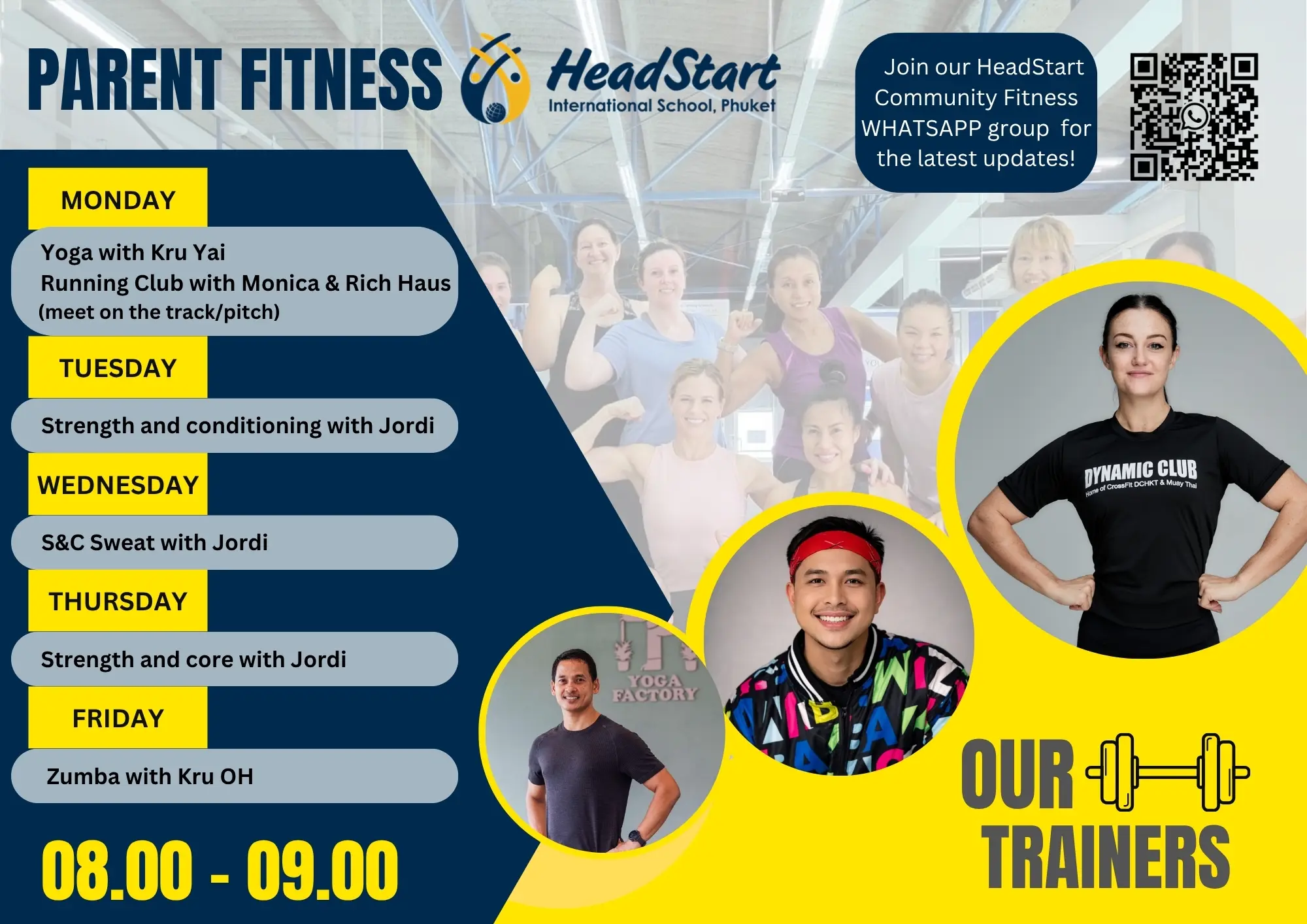
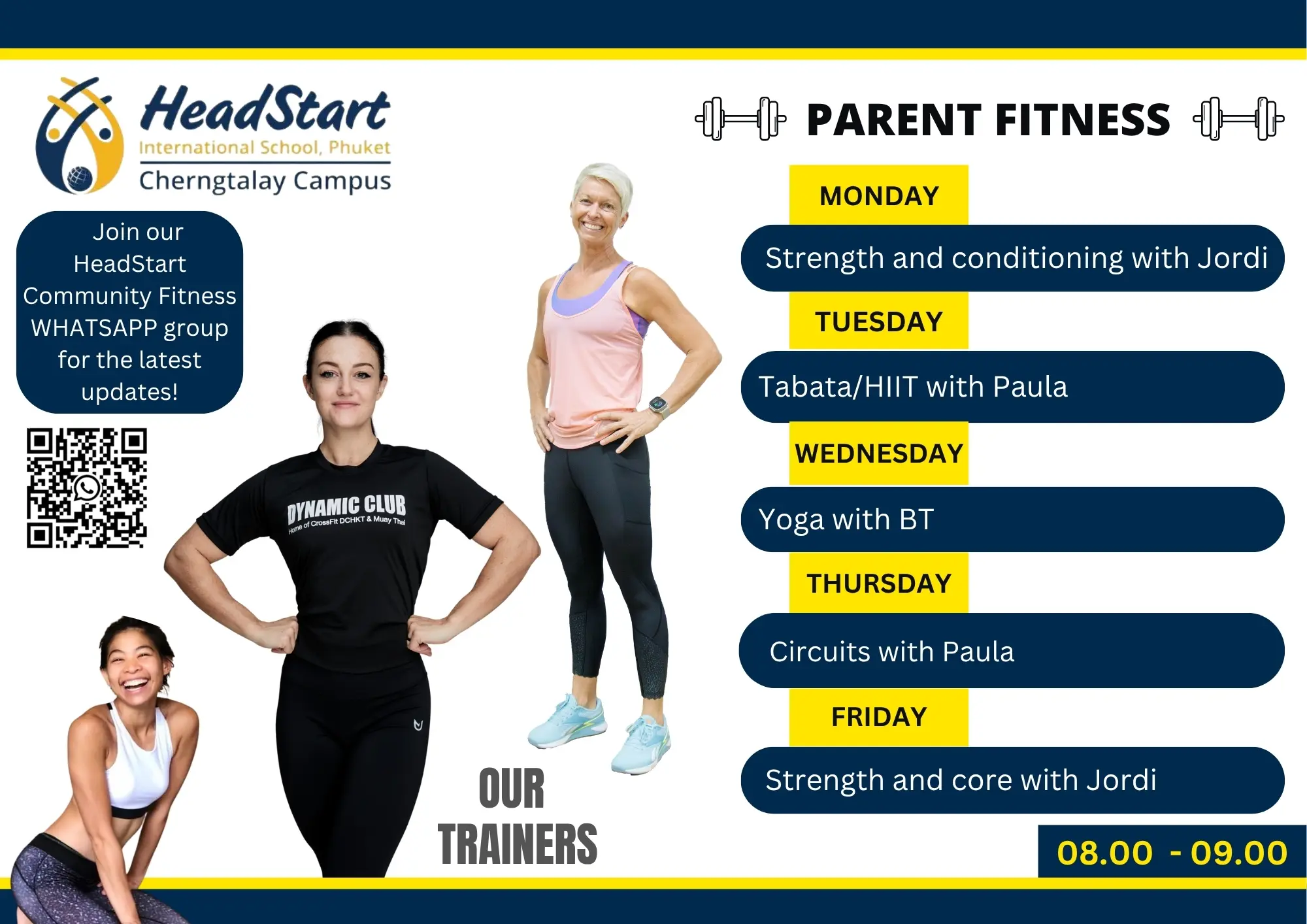
HeadStart provides complimentary use of the Fitness Gym for parents every weekday morning from 07:30-09:30 and in the afternoon from 14:30-18:00.
Classes run from 8:00-9:00am. To join, sign the list at the gym entrance or speak to a trainer. Available strictly for HeadStart parents only.